
The FIRST LEGO League Competition Pathway Explained: From K to the Global Stage
- Office WCDC
- Feb 9
- 3 min read

What Is FIRST LEGO League (FLL)?
FIRST® LEGO® League (FLL) is an international robotics program created by FIRST and LEGO Education, designed to introduce children to engineering, coding, research, and teamwork through a structured, age-appropriate competition system.
What makes FLL unique is that it is not a one-time contest, but a multi-year learning and competition pathway that grows with students—academically, socially, and competitively—from early elementary school through high school.

Grade-Based Program Pathway: From Beginner to Advanced
Kindergarten–3rd Grade: FIRST LEGO League Explore
Purpose: Early introduction to STEM, robotics, and teamworkCompetition Level: Festivals / Showcases (non-elimination)
FIRST LEGO League Explore is designed for young learners starting as early as Kindergarten. At this stage, the emphasis is on curiosity, creativity, and collaboration—not competition rankings.
Students:
Build simple LEGO models using motors and basic mechanisms
Learn foundational coding concepts through visual, block-based programming
Practice explaining their ideas and designs
Develop teamwork, communication, and confidence
This stage focuses on building interest and comfort with STEM, laying the groundwork for future competitive robotics.
Grades 4–8: FIRST LEGO League Challenge
Purpose: Core competitive robotics and research programCompetition Level: Qualifier → Regional / State → Advanced Opens
FIRST LEGO League Challenge officially begins at 4th grade and represents the most well-known and competitive part of the FLL program in the United States.
Each season, teams:
Build and program an autonomous LEGO robot
Complete mission-based challenges on an official competition field
Develop an Innovation Project addressing a real-world problem
Present their work to judges across multiple categories
Judging is based on four equally important areas:
Robot Performance
Robot Design
Innovation Project
Core Values (teamwork, professionalism, inclusion, and collaboration)
The FLL Competition Ladder Explained (What Parents Often Miss)
FIRST LEGO League Challenge follows a tiered advancement system. Not every team advances, but those that do move up level by level.
1️⃣ Qualifier Tournament (Local Level)
This is the entry point for most teams.
Hosted locally (school districts or regional hubs)
Dozens of teams compete
Teams are evaluated across all judging categories, not just robot scores
👉 Top-performing teams advance to the next level.
2️⃣ Regional or State Championship
(Example: Hudson Valley Championship, New York State Championship)
At this level:
Competition becomes significantly more rigorous
Teams represent top performers from multiple qualifiers
Judges expect deeper technical understanding and stronger presentations
Advancing from this level is a major achievement, especially for elementary and middle school teams.
3️⃣ U.S. Open / National-Level Events
(Invitation-based)
Some teams are selected to attend:
FIRST LEGO League U.S. Open
Other national invitationals
These events feature:
Elite teams from multiple states
Advanced judging standards
Greater emphasis on innovation and engineering rigor
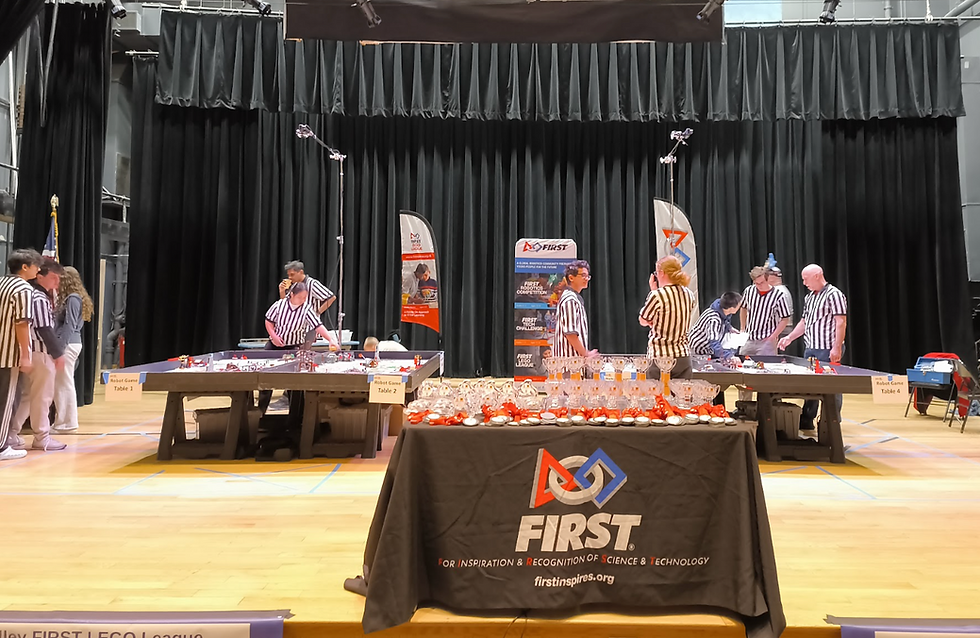
4️⃣ International Open (Global Stage)
The highest level of FLL competition includes:
International Opens held in the U.S., Europe, and Asia
Teams representing dozens of countries
Cultural exchange alongside world-class competition
Only a small percentage of teams reach this stage, typically after multiple years of experience and progression.
What Happens After FIRST LEGO League?
Students who complete FLL Challenge often transition to advanced FIRST programs:
Grades 7–10+: FIRST Tech Challenge (FTC)
Metal robots and advanced mechanical systems
Programming in Java or Python
CAD-based design and engineering documentation
High School: FIRST Robotics Competition (FRC)
Industry-scale robots
Corporate sponsorships and engineering mentors
Highly recognized experience for college STEM pathways
This progression mirrors real-world engineering development and is well regarded by U.S. colleges, particularly for students pursuing STEM fields.
Why Understanding the Pathway Matters for Parents
Parents who understand the full FIRST LEGO League pathway can:
Set realistic expectations about advancement
Choose programs with appropriate structure and coaching
Avoid rushing children into competition before they are ready
Support steady, long-term skill development
The most successful students are rarely “overnight winners.”They are students who start early, build strong foundations, and grow year by year.
Who Is FIRST LEGO League Right For?
FLL is ideal for students who:
Enjoy building, creating, or problem-solving
Like working in teams
Want structured, hands-on STEM exposure
May not yet know whether STEM is “their thing”
No prior robotics or coding experience is required.
Coming Next: What Parents Really Want to Know
In Part 2, we’ll cover:
What skills FLL truly builds
Time commitment during the season
Real-world costs in the U.S.
Whether FIRST LEGO League is worth the investment
👉 Continue to Part 2: Skills, Time Commitment, and Cost of FIRST LEGO League
Inspired by this success, we are pleased to announce that the next round of LEGO Robotics classes will begin on February 14. This session is ideal for students who are new to robotics or interested in building a strong foundation for future competition teams.
📅 New Session Start Date: February 14 1:00-2:30 PM EST
🧩 Focus: Robotics, coding, engineering design, and teamwork
📌 Class size is limited to ensure personalized instruction
Registration: https://bit.ly/legochallengenew


Comments